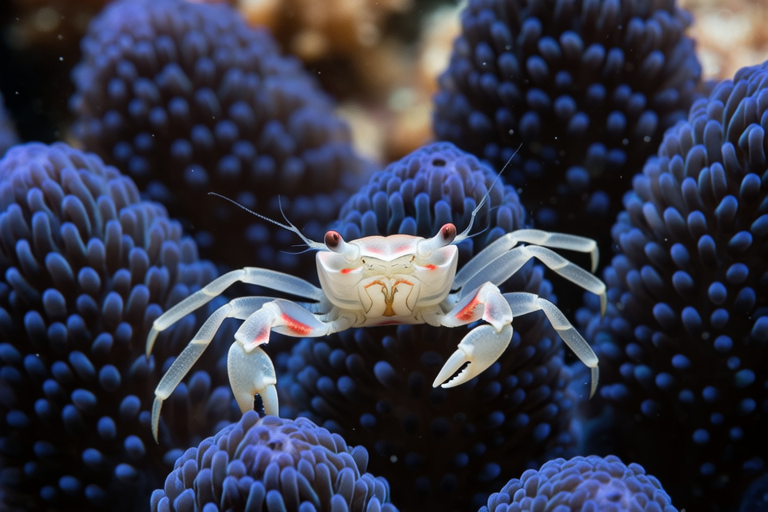
From Ocean Depths to Your Curiosity: Unveiling the Pea Crab
Welcome to a fascinating journey into the hidden world of the pea crab, a creature so small yet so significant in the grand tapestry of marine life. These diminutive crustaceans, named for their resemblance to a mere pea, have captured the imagination of scientists and nature enthusiasts alike. Dive into the depths with us as we explore the unique habitat, evolutionary adaptations, and ecological significance of this extraordinary species.
The Unique Habitat of Pea Crabs
Pea crabs, scientifically known as Pinnotheridae, are not your typical beachside creatures. They thrive in a very specific niche within the marine environment, preferring the sheltered confines of other marine organisms. One of their favorite habitats is the body of sea cucumbers, where they can find both protection and sustenance. Sea cucumbers, with their soft, tubular bodies, provide the perfect hideaway for these tiny crustaceans. Another common host is the barnacle, whose hard exterior offers a fortress against predators.
These crabs are truly masters of disguise. Their small size allows them to fit snugly inside their hosts, making them virtually invisible to potential threats. This symbiotic relationship is a marvel of evolutionary adaptation, where the pea crab benefits from the protection and nutrients provided by its host, while the host may receive some form of defense or cleaning service in return.
Size and Evolutionary Adaptations
Pea crabs are incredibly small, often measuring just a few millimeters in length. Their petite stature is a testament to their evolutionary prowess, allowing them to navigate through the intricate nooks and crannies of their hosts. Despite their size, they possess a remarkable array of adaptations that make them well-suited to their unique lifestyle.
One of the most striking features of pea crabs is their flattened body shape, which enables them to squeeze into tight spaces within their hosts. Their legs are adapted for gripping onto the internal structures of their hosts, ensuring they remain securely in place even when the host moves. Additionally, their claws are relatively weak compared to those of larger crabs, but this is compensated by their ability to rely on their hosts for food.
Mating Habits and Biodiversity Contributions
The mating habits of pea crabs are as intriguing as their habitat preferences. Male pea crabs often seek out females within the same host organism, and once they find a mate, they establish a lifelong bond. This monogamous behavior ensures that both partners benefit from the resources provided by their shared host. Female pea crabs lay eggs within the safety of their host, where they are protected until they hatch. The offspring then disperse into the surrounding waters, beginning their own search for suitable hosts.
The presence of pea crabs contributes significantly to the biodiversity of their ecosystems. By inhabiting a variety of marine organisms, they play a crucial role in nutrient cycling and the overall health of their environments. Their interactions with different hosts can lead to the spread of genetic material, fostering diversity and resilience within marine communities.
Historical Discoveries and Anecdotes
The history of pea crabs is filled with tales of discovery and intrigue. One of the earliest recorded observations of pea crabs was made by the famous naturalist Charles Darwin during his voyage on the HMS Beagle. Darwin noted the presence of pea crabs within barnacles, a finding that would later influence his theories on evolution and adaptation. His keen observations laid the groundwork for future research into these fascinating creatures.
Another anecdote involves the discovery of a new species of pea crab in the depths of the Pacific Ocean. A team of marine biologists stumbled upon this previously unknown species while exploring the habitat of deep-sea sea cucumbers. The excitement of uncovering such a rare specimen underscores the ongoing importance of exploration and research in marine biology.
Threats to Survival and Conservation Efforts
Despite their resilience and adaptability, pea crabs face several threats to their survival. One of the primary challenges is habitat destruction due to human activities such as overfishing and pollution. As their hosts are affected, so too are the pea crabs that depend on them. Climate change also poses a significant threat, as rising ocean temperatures and acidification can disrupt the delicate balance of marine ecosystems.
To address these challenges, various conservation efforts are underway. Marine protected areas are being established to safeguard critical habitats and ensure the survival of pea crabs and their hosts. Public awareness campaigns are also being launched to educate people about the importance of these tiny creatures and the broader implications for marine biodiversity. By understanding and protecting pea crabs, we can help preserve the intricate web of life that exists beneath the waves.
Conclusion
The pea crab is a remarkable example of the wonders that lie beneath the ocean’s surface. From their unique habitat preferences to their evolutionary adaptations, these tiny creatures play a vital role in marine ecosystems. Their contributions to biodiversity and their fascinating life cycles make them worthy of our attention and admiration.
As we continue to explore and learn more about pea crabs, it becomes increasingly clear that their survival is intertwined with the health of our oceans. By supporting conservation efforts and raising awareness, we can help ensure that these captivating creatures continue to thrive in the vast blue expanse. Join us in celebrating the pea crab and all the incredible life forms that call the ocean home.
