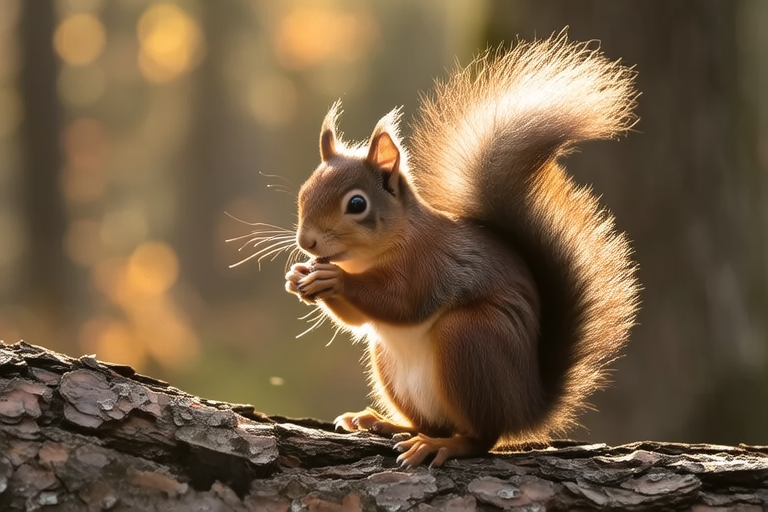
From Nut Hoarder to Gymnast: The Astonishing Life of a Squirrel
Squirrels, those ubiquitous creatures that dart across our parks and backyards, are more than just cute critters. They are masterful architects, skilled athletes, and resilient survivors. This article delves into the extraordinary world of these small mammals, exploring their remarkable physical abilities, their complex behaviors, and their fascinating biology.
The Physical Marvels of Squirrels
First and foremost, squirrels are physically extraordinary. Their bodies are designed for agility and speed. With powerful hind legs and flexible spines, they can leap impressive distances—up to six meters in some species. This leaping ability is not only a display of their athletic prowess but also a crucial adaptation for escaping predators and reaching food sources. Their muscular tails, which can be almost as long as their bodies, serve multiple purposes. It acts as a rudder during leaps, helping them to steer and balance mid-air, and also provides insulation in cold weather.
Their sharp claws, adapted for gripping bark and branches, allow them to navigate trees with ease. These claws are retractable, similar to those of cats, but unlike felines, squirrels’ claws are always visible. This feature aids them in maintaining a firm grip on slippery surfaces, ensuring their safety while climbing.
Nut Hoarders Extraordinaire
One of the most intriguing aspects of squirrel life is their practice of scatter-hoarding. In preparation for winter, squirrels bury nuts and seeds in various locations. This behavior is not only a testament to their intelligence but also a strategic survival mechanism. A single gray squirrel can store thousands of nuts over the course of a season. What’s even more astonishing is that they often don’t retrieve all of these caches, leaving behind a bounty of new trees to grow.
The process of finding these hidden treasures is equally fascinating. Research has shown that squirrels use a combination of spatial memory, visual cues, and scent markers to locate their buried treasures. Some studies suggest that squirrels may even use olfactory signals to differentiate between cached nuts and those left by other squirrels.
Athletic Acrobats of the Urban Jungle
In addition to their impressive jumping abilities, squirrels are renowned for their acrobatic skills. They effortlessly traverse power lines, fences, and rooftops, turning urban environments into their playground. This adaptability allows them to thrive in cities, where they have become familiar sights. In fact, some urban squirrels have been observed using tools, such as manipulating caps from soda cans to access food inside.
Their agility extends beyond just movement; it includes their ability to avoid danger. Squirrels are incredibly alert and can detect potential threats from a distance. When faced with a predator, they employ a range of tactics, including freezing in place, making themselves appear larger, or emitting warning calls to other squirrels.
Lesser-Known Facts About Squirrels
Beyond their well-known traits, there are several lesser-known facts about squirrels that add to their mystique. For instance, did you know that squirrels can communicate through a variety of vocalizations and body postures? These signals serve different purposes, from warning others of danger to expressing dominance or submission within their social hierarchy.
Another interesting aspect of squirrel biology is their ability to enter a state of torpor. Unlike true hibernation, torpor involves a temporary drop in body temperature and metabolic rate, allowing squirrels to conserve energy during periods of food scarcity. This adaptation is particularly useful in colder climates, where food sources may be limited.
Resilience and Adaptability
Perhaps the most striking characteristic of squirrels is their resilience and adaptability. Over time, they have successfully colonized diverse habitats, from dense forests to bustling cityscapes. This adaptability is evident in their diet, which varies widely depending on the availability of resources. While nuts and seeds form the bulk of their diet, squirrels are opportunistic feeders and will consume fruits, fungi, insects, and even bird eggs when necessary.
Urbanization has presented new challenges and opportunities for squirrels. In cities, they have learned to exploit human-provided food sources, such as bird feeders and garbage bins. However, this adaptation comes with its own set of risks, including increased exposure to diseases and conflicts with humans.
Scientific Insights and Conservation Efforts
Research into squirrel behavior and biology continues to yield valuable insights. Scientists are particularly interested in understanding how squirrels manage to remember the location of thousands of hidden nuts. Studies have revealed that squirrels use a combination of spatial memory and environmental cues to find their caches. This research not only sheds light on the cognitive abilities of squirrels but also provides valuable information on memory processes in animals.
Conservation efforts are also underway to protect squirrel populations. Habitat loss and fragmentation pose significant threats to many species, particularly those that rely on large, contiguous forest areas. Conservationists are working to create and preserve green corridors, which provide safe passage for squirrels and other wildlife. Additionally, public education campaigns aim to reduce human-wildlife conflicts and promote coexistence.
Conclusion
The life of a squirrel is one of constant adaptation and survival. From their incredible physical abilities to their sophisticated caching strategies, these small mammals have evolved to thrive in a wide range of environments. As we continue to learn more about their biology and behavior, it becomes increasingly clear that squirrels are not just charming visitors to our parks and gardens, but also remarkable examples of resilience and adaptability in nature.
So next time you see a squirrel scurrying across your backyard, take a moment to appreciate the extraordinary creature before you. Its life is a testament to the wonders of evolution and the beauty of the natural world.
