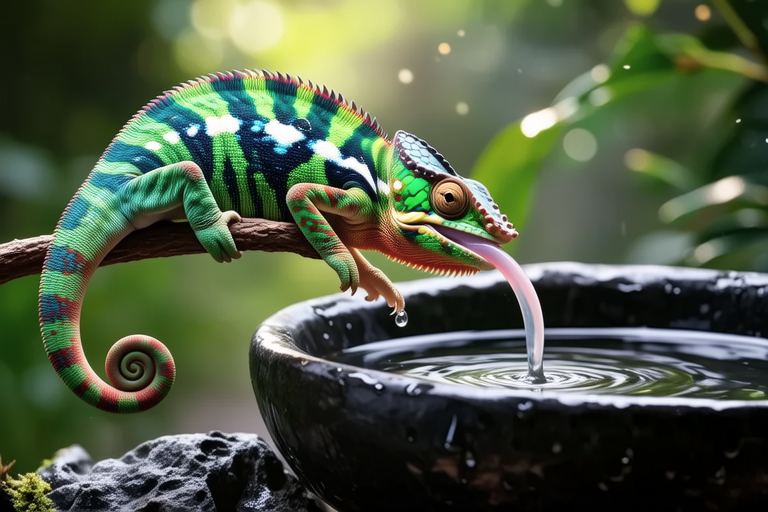
From Basking Spot to Bowl: A Day in the Life of a Chameleon
Welcome to the fascinating world of chameleons! These captivating reptiles have long been admired for their unique characteristics, such as their ability to change colors and their remarkable eyesight. This article takes you through a day in the life of a chameleon, from its morning basking routine to its evening care, providing an insight into its daily activities and the importance of maintaining a healthy environment for these creatures.
The Morning Bask
As the sun rises, our chameleon begins its day by finding a suitable basking spot. Chameleons are ectothermic, meaning they rely on external heat sources to regulate their body temperature. The ideal basking spot is where the temperature ranges between 90°F and 100°F (32°C to 38°C). In the wild, this would be a branch or rock that receives direct sunlight. As a responsible pet owner, it’s essential to provide artificial heating sources like UVB bulbs and ceramic heaters to mimic natural sunlight.
During this time, the chameleon also benefits from exposure to UVB light, which helps it synthesize vitamin D3. This vitamin is crucial for calcium absorption, ensuring strong bones and overall good health. It’s recommended to place the UVB bulb at one end of the enclosure, allowing the chameleon to move closer or farther away depending on its comfort level. Additionally, placing branches or rocks at various heights provides multiple basking options.
Unique Hunting Techniques
Once the chameleon has warmed up, it’s time to hunt for food. Chameleons are insectivores, primarily feeding on insects like crickets, dubia roaches, and mealworms. Their unique hunting technique involves the use of their long, sticky tongues, which can extend up to twice the length of their bodies. They wait patiently until prey comes within range, then launch their tongue with incredible speed and accuracy.
Chameleons’ eyes are independently mobile, allowing them to look in two different directions simultaneously. This adaptation enables them to locate prey more effectively while remaining alert for potential threats. Their color-changing abilities also play a role in hunting; some species use specific patterns or colors to lure in unsuspecting insects.
Interactions with the Environment
A chameleon’s environment is crucial for its well-being. A well-designed terrarium provides the necessary space for climbing, basking, and hiding. A typical setup includes live plants, branches, and rocks to create a three-dimensional space that mimics the chameleon’s natural habitat. Live plants not only add aesthetic value but also help maintain humidity levels and provide hiding spots.
Humidity is another important factor in maintaining a healthy chameleon. Most chameleons require a humidity level of around 40-60%. Achieving this can be done through misting the enclosure several times a day, using a humidifier, or placing a water dish in the terrarium. It’s essential to monitor humidity levels regularly, as too much or too little moisture can lead to health issues.
Evening Care
As the day winds down, it’s time to prepare for the evening. Feeding the chameleon is an essential part of its care routine. In captivity, it’s best to offer a variety of appropriately sized insects. Dusting the insects with a calcium supplement helps ensure the chameleon gets the nutrients it needs. Some owners also use multivitamin supplements, but it’s crucial to follow the recommended dosages to avoid over-supplementation.
After feeding, it’s important to remove any uneaten insects from the enclosure. Leftover insects may stress the chameleon or nibble on its skin, leading to injuries. Regular cleaning of the terrarium is also necessary to maintain hygiene and prevent the growth of harmful bacteria. This includes wiping down surfaces, replacing substrate, and cleaning water dishes.
Dietary Needs
Chameleons have specific dietary requirements that must be met to ensure their health and longevity. In addition to insects, they require a balanced diet that includes vitamins and minerals. Calcium is particularly important, as it helps maintain strong bones and proper muscle function. A deficiency in calcium can lead to metabolic bone disease, causing deformities and other health issues.
To prevent calcium deficiency, it’s recommended to dust insects with a high-quality calcium powder without added vitamin D3. Vitamin D3 should be provided through UVB light exposure rather than supplementation. Multivitamins can be used occasionally, but it’s best to consult with a veterinarian before introducing new supplements.
The Importance of a Well-Maintained Terrarium
A well-maintained terrarium is essential for the health and happiness of your chameleon. The enclosure should provide ample space for movement and exploration. A rule of thumb is to provide at least 2 feet of vertical space per foot of the chameleon’s total length. For example, a 10-inch chameleon would need an enclosure that’s at least 20 inches tall.
In addition to space, the terrarium should include appropriate lighting, heating, and humidity controls. These elements work together to create a comfortable and stimulating environment. Proper ventilation is also crucial to prevent the buildup of harmful gases and ensure fresh air circulation. Regular monitoring of temperature, humidity, and lighting ensures that the chameleon remains healthy and active.
Tips for Potential Owners
Considering a chameleon as a pet? Here are some tips to help you provide optimal living conditions:
- Research thoroughly: Before bringing a chameleon home, learn about its specific needs and behaviors. Understanding their unique requirements will help you create a suitable environment.
- Choose the right enclosure: Select an appropriately sized terrarium that meets the chameleon’s space and environmental needs. Ensure there’s plenty of vertical space for climbing.
- Provide proper lighting: Invest in high-quality UVB bulbs and position them correctly within the enclosure. Replace bulbs every six months to ensure they continue to emit the necessary wavelengths.
- Maintain humidity: Use a hygrometer to monitor humidity levels and adjust misting frequency as needed. Too much moisture can lead to respiratory infections, while too little can cause dehydration.
- Offer a varied diet: Feed a diverse selection of insects and dust them with calcium powder. Consult with a veterinarian to determine if additional supplements are necessary.
- Clean regularly: Keep the terrarium clean by removing waste, cleaning surfaces, and replacing substrate as needed. Regular cleaning prevents the growth of harmful bacteria and keeps the chameleon healthy.
Raising a chameleon requires dedication and commitment, but the rewards are immeasurable. With proper care and attention, your chameleon will thrive, offering you years of enjoyment and companionship. By understanding their needs and creating a suitable environment, you can ensure that your chameleon leads a happy and healthy life.
From its morning bask to its evening care, each day brings new opportunities to observe and appreciate the unique behaviors and characteristics of these fascinating creatures. Whether you’re a seasoned reptile enthusiast or a first-time owner, the journey of caring for a chameleon is both rewarding and enriching.
