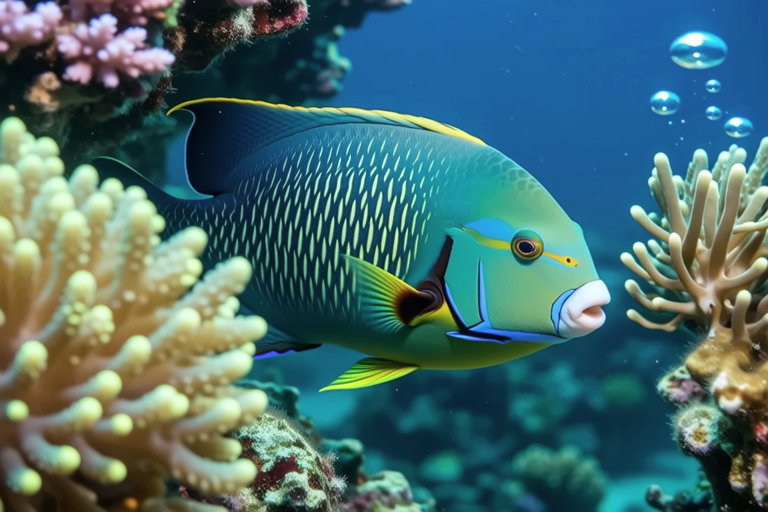
The Vibrant Underwater World of Parrot Fish: Artists of the Sea
Parrotfish, members of the family Scaridae, are some of the most colorful and captivating creatures in the ocean. Their striking appearance and vital role in maintaining the health of coral reefs make them true artists of the sea. With over 90 species found across tropical and subtropical waters worldwide, these fish are essential to the marine ecosystem.
Diverse and Distinctive Coloring
Parrotfish display a remarkable array of colors and patterns that can range from bright oranges and yellows to deep purples and blues. Their scales and fins often feature intricate designs, making them stand out among other marine life. Juvenile parrotfish may have different coloration than adults, which adds to their diversity. For instance, the juvenile blue parrotfish (Scarus coelestinus) has a brown body with blue spots, while the adult is predominantly blue with yellow accents. This variation in coloration helps them blend into their environment or signal readiness for mating.
Behavioral Contributions to Coral Reef Health
One of the most significant roles parrotfish play is in maintaining the health of coral reefs. They are herbivores, primarily feeding on algae that grow on coral. By consuming this algae, they prevent it from smothering and killing the coral polyps beneath. This activity is crucial for the survival of coral reefs, as excessive algae growth can lead to coral death and reef degradation. Additionally, parrotfish contribute to the formation of sand by biting off pieces of coral and grinding them up in their pharyngeal teeth. The resulting sand particles are then excreted, helping to build and maintain the sandy beaches around coral reefs.
Habitat Preferences Across Different Oceans
Parrotfish inhabit various regions of the world’s oceans, including the Pacific, Atlantic, and Indian Oceans. They prefer warm, shallow waters where coral reefs thrive, typically staying within depths of 30 meters or less. In the Pacific Ocean, species like the midnight parrotfish (Sparisoma viride) and the bumphead parrotfish (Bolbometopon muricatum) can be found. The Atlantic Ocean hosts the queen parrotfish (Scarus vetula), known for its vibrant orange coloration. Meanwhile, the Indian Ocean is home to the humphead parrotfish (Bolbometopon muricatum), one of the largest parrotfish species, which can grow up to 1.5 meters in length.
Threats Faced by Parrotfish
Despite their importance to marine ecosystems, parrotfish populations are under threat due to human activities. Overfishing poses a significant danger, as many species are targeted for their meat. Habitat destruction caused by coastal development, pollution, and climate change also affects their ability to thrive. Coral bleaching events, which occur when corals expel the symbiotic algae living in their tissues due to stress from high water temperatures, can decimate the coral reefs that parrotfish rely on for food and shelter. Protecting parrotfish habitats and implementing sustainable fishing practices are essential steps in ensuring their survival.
Fascinating Feeding Habits
Parrotfish have a unique feeding mechanism that sets them apart from other marine animals. Their beak-like mouths allow them to scrape algae off coral surfaces efficiently. Inside their mouths, they possess a set of pharyngeal teeth that grind up the coral and algae mixture before digestion. This process contributes to the formation of sand, as mentioned earlier. Some species, like the queen parrotfish, have been observed to sleep in mucous cocoons they secrete, possibly to protect themselves from predators or parasites.
Color and Shape Changes with Age
Parrotfish undergo dramatic changes in color and shape as they mature. These transformations are part of a complex life cycle that includes several distinct stages. Juvenile parrotfish often resemble females but later develop into males or become supermales, which are larger and more brightly colored. Supermales can dominate harems of females and exhibit territorial behavior. The transition from female to male, known as sex reversal, occurs when environmental conditions favor male reproduction. This phenomenon ensures genetic diversity within populations and contributes to the resilience of parrotfish communities.
Significance in Marine Ecosystems
Parrotfish play a critical role in maintaining the balance of coral reef ecosystems. Their grazing helps control algal growth, allowing coral polyps to flourish and form new colonies. This, in turn, supports a wide variety of marine life that depends on coral reefs for food and shelter. By contributing to the formation of sand, parrotfish also aid in the creation of habitats for other species, such as turtles and crabs. Furthermore, their presence attracts divers and snorkelers, generating income for local economies through tourism.
In conclusion, parrotfish are more than just beautiful fish; they are vital components of marine ecosystems. Their diverse coloring, unique feeding habits, and contributions to coral reef health make them indispensable to the underwater world. Understanding and protecting these fascinating creatures is crucial for preserving the health and beauty of our oceans.
