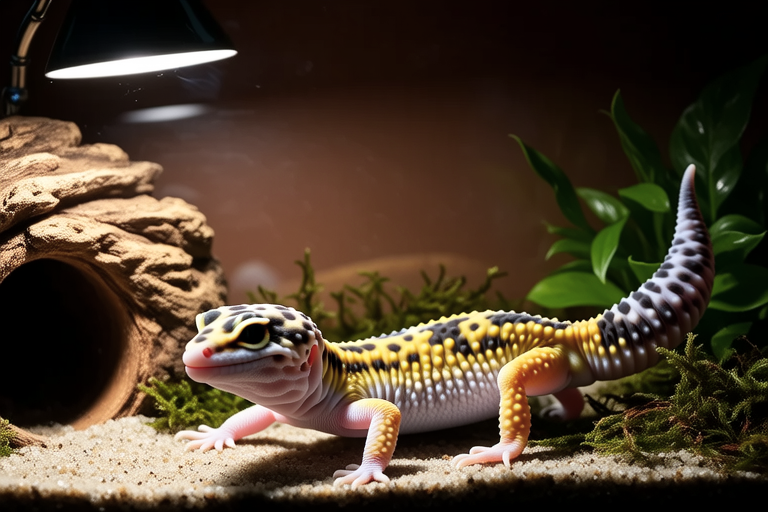
DIY Projects: Creating a Stimulating Environment for Leopard Geckos
Welcome to this comprehensive guide on creating a stimulating environment for your beloved leopard geckos. In this article, we will cover everything you need to know about providing a healthy and engaging habitat for these fascinating reptiles. From essential habitat components to step-by-step instructions for building or modifying enclosures, we’ll explore safe substrate options, creative hiding spots, and interactive toys. We’ll also provide tips on maintaining proper temperature gradients and lighting cycles, ensuring the safety and well-being of your pets.
Essential Habitat Components
To create an optimal living space for your leopard gecko, it’s crucial to understand the essential components that make up their habitat. These components include:
- Temperature Gradient: Leopard geckos require a temperature gradient to regulate their body temperature. This means having a warm side (88-94°F) and a cool side (75-80°F).
- Humidity Levels: These geckos thrive in low humidity environments, so it’s important to keep the enclosure dry.
- UV Lighting: While leopard geckos don’t need direct UVB light, they benefit from a consistent day-night cycle to maintain their circadian rhythms.
- Substrate: The material used for bedding should be safe, easy to clean, and suitable for burrowing.
- Hiding Spots: Providing multiple hiding spots allows your gecko to feel secure and reduces stress.
- Water Bowl: Fresh water should always be available for drinking and soaking.
Step-by-Step Instructions for Building or Modifying Enclosures
Building or modifying an enclosure for your leopard gecko can be both fun and rewarding. Below are some simple steps to help you create a perfect home for your pet:
Materials Needed:
- A glass or plastic tank with a secure lid
- Thermal mats or heat lamps
- UVB light (optional)
- Thermometer and hygrometer
- Substrate
- Hiding spots
- Water bowl
Steps:
- Select the Right Tank: Choose a tank that is at least 10 gallons for one gecko, increasing the size for more geckos. A tank that is longer than it is tall is ideal.
- Set Up Temperature Gradient: Place a thermal mat or heat lamp on one side of the tank to create a warm spot. Use a thermometer to ensure the warm side reaches the desired temperature.
- Add Humidity Control: Leopard geckos prefer a dry environment, so avoid adding too much moisture. If necessary, use a hygrometer to monitor humidity levels.
- Install UV Lighting: Although not strictly necessary, a UVB light can help simulate natural daylight cycles. Install the light on the opposite side of the heat source to prevent overheating.
- Choose Substrate: Select a substrate that is easy to clean and doesn’t pose any health risks to your gecko. Options include paper towels, reptile carpet, or coconut fiber.
- Add Hiding Spots: Place several hiding spots throughout the tank to give your gecko places to retreat. You can use commercially available hides or create your own using cardboard boxes or PVC pipes.
- Provide Water Bowl: Fill a shallow dish with fresh water and place it in the tank. Make sure it’s heavy enough to prevent tipping.
Safe Substrate Options
The substrate you choose for your leopard gecko’s enclosure is crucial for their health and comfort. Here are some safe and effective options:
- Paper Towels: Paper towels are inexpensive, easy to replace, and non-toxic. They’re particularly useful for new hatchlings or sick geckos.
- Reptile Carpet: Reptile carpet is reusable, easy to clean, and provides a soft surface for your gecko to walk on.
- Coconut Fiber: Coconut fiber mimics natural soil and is excellent for burrowing. It’s also absorbent, helping to control humidity.
- Avoid Dangerous Substrates: Avoid substrates like sand, gravel, and wood shavings, as they can cause impaction if ingested.
Creative Hiding Spots
Leopard geckos are naturally shy creatures that enjoy hiding. Providing multiple hiding spots in their enclosure encourages exploration and reduces stress. Here are some creative ideas:
- Cardboard Boxes: Cut small entrance holes in cardboard boxes and place them around the tank. They’re easily customizable and biodegradable.
- PVC Pipes: Cut PVC pipes into different lengths and diameters to create tunnels and caves. They’re durable and easy to clean.
- Bark Pieces: Arrange bark pieces in various configurations to create natural-looking hiding spots. They add visual interest to the enclosure.
- Plastic Containers: Drill small holes in plastic containers and fill them with substrate to create cozy hideouts. They’re lightweight and easy to move.
Interactive Toys
Incorporating interactive toys into your leopard gecko’s enclosure can enhance their physical activity and mental stimulation. Here are some ideas:
- Branches and Rocks: Add branches and rocks to create climbing opportunities and add visual interest to the tank.
- Maze-like Structures: Create a maze-like structure using PVC pipes and connectors to encourage exploration.
- Floating Objects: Place floating objects in the water bowl to provide entertainment and exercise.
- Soft Balls: Introduce soft balls or other lightweight toys that your gecko can push around or climb on.
Tips for Maintaining Proper Temperature Gradients and Lighting Cycles
Proper temperature gradients and lighting cycles are essential for your leopard gecko’s health and well-being. Follow these tips to maintain optimal conditions:
- Temperature Monitoring: Use thermometers and hygrometers to regularly check the temperature and humidity levels in the enclosure. Adjust heating elements as needed to maintain the correct gradient.
- Lighting Schedule: Set a consistent lighting schedule to mimic natural daylight cycles. Turn off lights at night to allow your gecko to rest.
- Heating Elements: Ensure heating elements are securely mounted and away from direct contact with your gecko to prevent burns.
- Humidity Control: Maintain low humidity levels by providing adequate ventilation and avoiding excessive moisture.
Conclusion
Creating a stimulating environment for your leopard gecko is a rewarding endeavor that promotes their health and happiness. By following the guidelines outlined in this article, you can build or modify an enclosure that meets all their needs. Remember to prioritize safety and well-being while allowing room for creativity. With the right setup, your leopard gecko will have a comfortable and enriching home where they can thrive.
