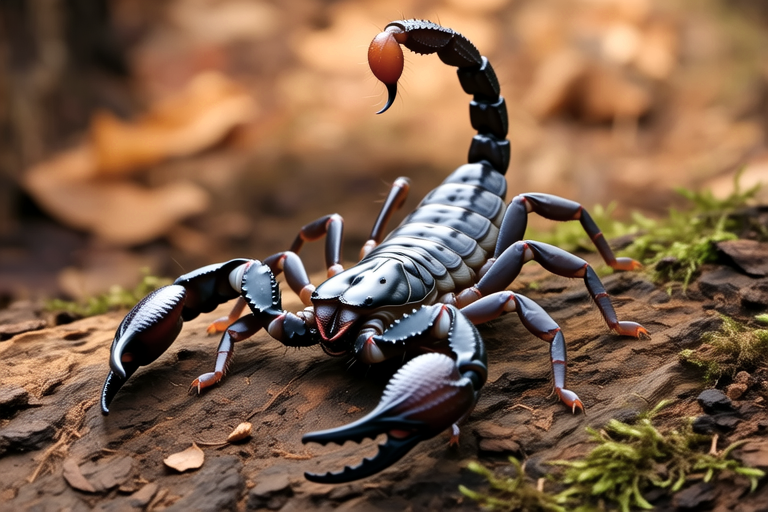
The Transformation from Fear to Admiration: The Heterometrus Spinifer
Throughout human history, the Heterometrus spinifer, commonly known as the Malaysian red forest scorpion, has been the subject of both fear and admiration. This arachnid, with its menacing appearance and potent venom, has long been shrouded in mystery. However, as we delve deeper into the world of the Heterometrus spinifer, we discover a creature that is far more fascinating than initially perceived. From its physical characteristics to its behavior and ecological role, this scorpion offers a unique perspective on the importance of overcoming misconceptions and fostering appreciation for lesser-known species.
Physical Characteristics
The Heterometrus spinifer is a large scorpion, typically measuring between 7 and 10 centimeters in length. Its most striking feature is its bright red coloration, which serves as a warning to potential predators. The scorpion’s exoskeleton is thick and robust, providing protection against external threats. The pincers, or pedipalps, are strong and can be used for capturing prey or defending against rivals. Perhaps the most recognizable feature of the Heterometrus spinifer is its formidable tail, tipped with a stinger that houses a potent venom.
Contrary to popular belief, the venom of the Heterometrus spinifer is not deadly to humans. While a sting can cause intense pain, swelling, and discomfort, it is rarely life-threatening. Scientific studies have shown that the venom primarily targets small insects, paralyzing them to facilitate consumption. This misconception stems from the scorpion’s intimidating appearance and the fear associated with venomous creatures. Understanding the true purpose of the venom helps to dispel these fears and encourages a greater appreciation for the scorpion’s unique adaptations.
Habitat and Behavior
The Heterometrus spinifer is native to Southeast Asia, where it inhabits tropical rainforests, caves, and rocky outcrops. These environments provide the ideal conditions for the scorpion to thrive, offering ample shelter and an abundance of prey. The scorpion is nocturnal, emerging at night to hunt for insects, spiders, and other small arthropods. It uses its keen sense of smell and touch to locate prey, often ambushing unsuspecting victims.
In addition to its hunting prowess, the Heterometrus spinifer is also known for its defensive behaviors. When threatened, the scorpion will raise its tail and display its stinger, a clear warning to potential predators. If the threat persists, the scorpion may resort to using its powerful pincers to deliver a painful pinch. Despite these defensive mechanisms, the Heterometrus spinifer is generally non-aggressive towards humans, preferring to avoid confrontation whenever possible.
Personal anecdotes from individuals who have encountered the Heterometrus spinifer in its natural habitat further illustrate the creature’s gentle nature. One such story involves a group of researchers conducting a field study in Malaysian rainforest. Initially wary of the scorpions they encountered, the team soon realized that the creatures were more interested in avoiding human contact than attacking. Over time, the researchers began to appreciate the scorpions’ role in maintaining the balance of their ecosystem, fostering a newfound respect for these misunderstood animals.
Role in Ecosystem
The Heterometrus spinifer plays a crucial role in its ecosystem, serving as both predator and prey. As a top predator within its niche, the scorpion helps to control populations of insects and other small arthropods, preventing overpopulation and ensuring the health of the forest environment. In turn, the scorpion itself becomes prey for larger animals, including birds, reptiles, and mammals. This intricate web of interactions highlights the importance of maintaining biodiversity and protecting species like the Heterometrus spinifer.
Scientific studies have demonstrated the impact of removing key species from ecosystems. For example, a study conducted in a Malaysian rainforest revealed that the removal of the Heterometrus spinifer led to an increase in insect populations, disrupting the delicate balance of the ecosystem. This research underscores the need for conservation efforts and emphasizes the importance of understanding the interconnectedness of all living organisms.
Conservation Efforts
Despite its ecological significance, the Heterometrus spinifer faces numerous threats, including habitat loss, deforestation, and pesticide use. Conservationists are working tirelessly to protect these scorpions and their habitats, recognizing the vital role they play in maintaining ecosystem health. Efforts include establishing protected areas, promoting sustainable land use practices, and raising public awareness about the importance of preserving biodiversity.
One notable initiative involves the creation of “scorpion-friendly” gardens, where local communities are encouraged to plant native vegetation and provide shelter for the Heterometrus spinifer and other wildlife. These gardens not only serve as safe havens for scorpions but also promote environmental education and community involvement in conservation efforts. By fostering a deeper understanding of the species and its true nature, these initiatives aim to transform fear into admiration and encourage greater appreciation for the Heterometrus spinifer.
Fostering Appreciation
To truly appreciate the Heterometrus spinifer, it is essential to understand its place within the broader context of biodiversity. Each species, no matter how seemingly insignificant, contributes to the intricate web of life that sustains our planet. By embracing this interconnectedness, we can begin to shift our perceptions of creatures like the Heterometrus spinifer from fear to admiration.
Engaging with the natural world through activities such as guided tours, citizen science projects, and educational programs can help to foster this appreciation. These experiences allow individuals to observe the Heterometrus spinifer in its natural habitat, gaining firsthand knowledge of its behavior and ecological role. As our understanding deepens, so too does our respect for these remarkable creatures, encouraging us to become advocates for their preservation.
In conclusion, the journey from fear to admiration of the Heterometrus spinifer is one that highlights the importance of overcoming misconceptions and fostering appreciation for lesser-known species. Through a deeper understanding of the scorpion’s physical characteristics, habitat, behavior, and role in its ecosystem, we can begin to see these creatures not as threats but as integral parts of the natural world. By supporting conservation efforts and engaging with the environment, we can work together to ensure the survival of the Heterometrus spinifer and preserve the rich biodiversity of our planet.
