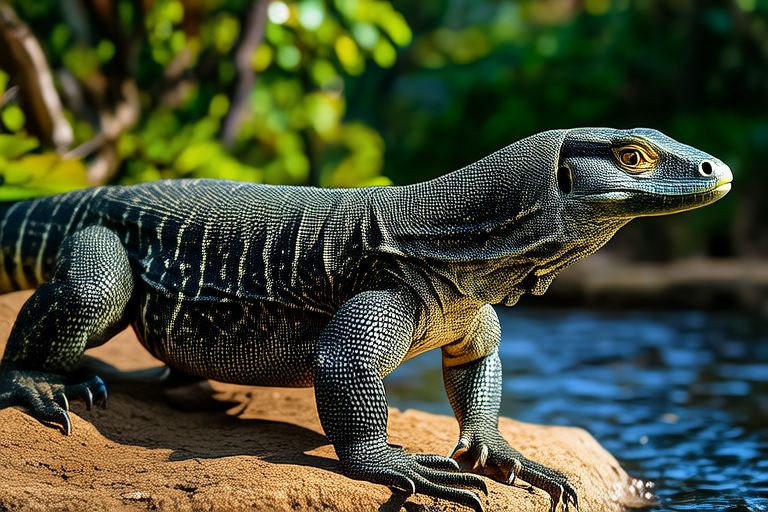
Top 10 Fascinating Facts About the Majestic Water Monitor Lizard
The water monitor lizard (Varanus salvator) is one of the most impressive reptiles on the planet, renowned for its striking appearance, remarkable adaptability, and fascinating behaviors. This article delves into ten lesser-known facts that highlight the unique characteristics and capabilities of this magnificent creature.
1. The Largest Lizard You’ll Ever Meet
Water monitors are the second-largest lizards in the world, second only to their cousins, the Komodo dragons. Adult males can reach lengths of up to 3 meters (9.8 feet) and weigh as much as 50 kilograms (110 pounds). Their muscular bodies are equipped with powerful limbs that allow them to move swiftly on land and excel in aquatic environments. These lizards possess a long, laterally compressed tail that aids in swimming and serves as a formidable weapon against predators. The tail alone can measure over half the lizard’s total length, making it an effective tool for balance and defense.
2. Adept Swimmers with a Secret Weapon
Despite their terrestrial prowess, water monitors are equally at home in the water. They are strong swimmers, capable of diving to depths of up to 4.5 meters (15 feet) and holding their breath for up to 30 minutes. Their nostrils are positioned high on their snouts, allowing them to breathe easily while partially submerged. What makes these lizards truly exceptional swimmers is their ability to use their tails like propellers, generating thrust and maneuvering with precision. Additionally, they have webbed feet that enhance their swimming efficiency, enabling them to cover large distances in search of food or escape predators.
3. The Ultimate Hunter: Adaptations for Survival
Water monitors have several unique adaptations that make them efficient hunters. Their keen eyesight allows them to spot prey from great distances, and their sharp, recurved teeth enable them to grip and hold onto slippery prey. They also have a highly developed sense of smell, which helps them locate hidden or buried animals. Moreover, water monitors have a forked tongue that assists in detecting chemical cues in the environment, similar to snakes. This sensory adaptation enables them to track down prey with remarkable accuracy, even when it is concealed beneath the soil or water.
4. A Versatile Diet: From Snakes to Fruit
Water monitors are opportunistic feeders with a diverse diet that includes small mammals, birds, fish, amphibians, insects, and even carrion. They are also known to consume fruits and vegetation, particularly during certain seasons. This dietary flexibility allows them to thrive in various habitats and ensures their survival in areas where prey may be scarce. Interestingly, water monitors play a crucial role in controlling populations of invasive species, such as rats and mice, making them valuable members of their ecosystems.
5. Social Creatures with Complex Behaviors
Contrary to popular belief, water monitors are not solitary creatures. They exhibit complex social behaviors, including communication through body language and vocalizations. Males engage in ritualized combat during mating season, displaying dominance by head-bobbing and tail-lashing. Females also participate in social interactions, often forming groups near nesting sites. Water monitors are known to share communal basking spots and have been observed helping each other shed their skin. These behaviors suggest a level of social complexity that is rare among reptiles.
6. Exceptional Problem-Solving Skills
Studies have shown that water monitors possess remarkable problem-solving abilities. In captivity, they have demonstrated the capacity to open doors, retrieve food, and navigate mazes. Their intelligence is evident in their ability to learn from experience and adapt their behavior accordingly. For example, they can remember the location of food sources and return to them repeatedly. This cognitive prowess is further evidenced by their ability to manipulate objects and tools, such as sticks or stones, to obtain inaccessible prey. These skills suggest that water monitors may possess a higher degree of intelligence than previously thought.
7. The Secret Lives of Nesting Mothers
Female water monitors are dedicated mothers who go to great lengths to ensure the safety of their offspring. After laying eggs in a burrow, they guard the nest for several weeks, protecting it from potential predators. Once the eggs hatch, the mother continues to care for her young, teaching them essential survival skills such as hunting and avoiding danger. This prolonged parental care is unusual among reptiles and highlights the water monitor’s commitment to ensuring the next generation’s success. Furthermore, female water monitors are known to mate with multiple males, increasing genetic diversity within their offspring.
8. Adept Climbers and Jumpers
Water monitors are not only skilled swimmers but also excellent climbers and jumpers. Their strong limbs and sharp claws allow them to scale trees with ease, reaching heights of up to 10 meters (33 feet). They can leap from branches into water bodies below, making sudden appearances to surprise unwary prey. This climbing ability is particularly useful for accessing food sources that are otherwise difficult to reach, such as birds’ nests or fruit hanging from tall trees. Additionally, water monitors use their climbing skills to escape threats and find safe perches for resting and basking in the sun.
9. Camouflage Masters
Water monitors have evolved an array of color patterns and textures that help them blend seamlessly into their surroundings. Their scales are typically brown or olive-green, with dark bands or spots that break up their outline and make them nearly invisible against the forest floor or riverbanks. Some individuals display vibrant blue or yellow markings, especially around their throats, which may serve as a warning signal to potential predators. These color variations not only provide camouflage but also contribute to the species’ overall beauty and diversity.
10. Cultural Significance and Conservation Challenges
In many cultures, water monitors hold significant cultural and spiritual value. They are revered in some Southeast Asian communities as symbols of good fortune and protection. However, these lizards face numerous threats due to habitat destruction, illegal wildlife trade, and human persecution. As a result, conservation efforts are essential to protect water monitors and preserve their natural habitats. Many organizations are working tirelessly to raise awareness about the importance of these magnificent creatures and promote sustainable practices that benefit both wildlife and local communities. By supporting these initiatives, we can help ensure the continued existence of water monitors for future generations.
