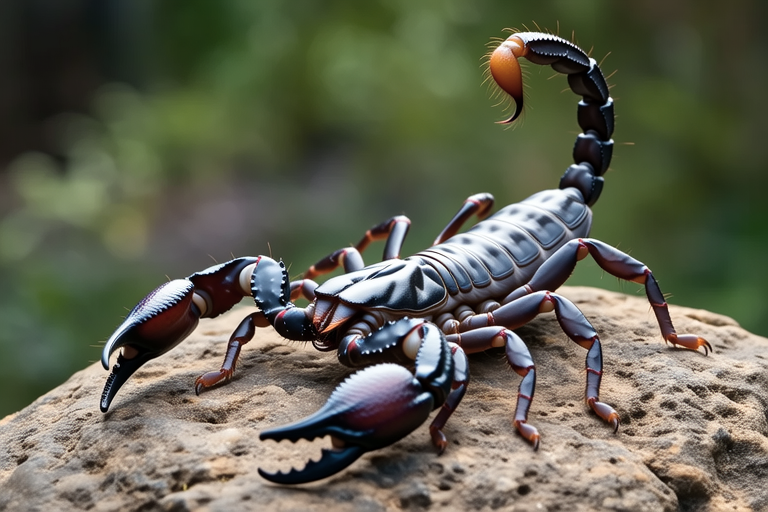
The Prickly Majesty of Heterometrus Spinifer: An Exotic Scorpion Species
Scorpions have long captivated human imagination, often perceived as sinister creatures lurking in the shadows. Among these enigmatic arachnids, Heterometrus spinifer stands out as a particularly intriguing species. This article delves into the physical characteristics, habitat, behavior, diet, and unique adaptations of Heterometrus spinifer, comparing it with other scorpion species to highlight what makes this species particularly prickly yet majestic. Additionally, we will address common myths and misconceptions surrounding the species, providing scientific insights to clarify them.
Physical Characteristics
Heterometrus spinifer, commonly known as the Indian Forest Scorpion, boasts a robust body structure that sets it apart from many other scorpion species. With a length ranging from 8 to 14 centimeters, it is one of the larger scorpions found in Asia. Its most distinctive feature is the presence of prominent spines on its tail (metasoma), which gives rise to its specific name ‘spinifer’, meaning ‘spiny’. These spines are not merely ornamental; they play a crucial role in the scorpion’s defensive mechanisms.
The overall coloration of Heterometrus spinifer varies from dark brown to black, providing excellent camouflage against the forest floor. This coloration helps it blend seamlessly into its environment, making it difficult for predators to spot. The scorpion’s chelae (pincers) are relatively large and powerful, capable of delivering a painful pinch. However, it primarily uses its venomous sting for self-defense, which is located at the tip of its tail. The venom contains neurotoxins that can cause severe pain and swelling in humans but is rarely fatal.
Habitat and Distribution
Heterometrus spinifer thrives in tropical and subtropical regions across Southeast Asia, including India, Sri Lanka, Bangladesh, Myanmar, Thailand, and Vietnam. It prefers dense forests, rocky areas, and humid environments such as mangrove swamps. Unlike some desert-dwelling scorpions, Heterometrus spinifer requires high humidity levels to maintain its moisture balance, making it well-adapted to its lush habitats.
In its natural habitat, this scorpion typically burrows into the ground or hides under logs, rocks, and leaf litter. These hiding spots serve multiple purposes: they provide shelter from harsh weather conditions, protect the scorpion from potential threats, and offer ambush sites for prey. The ability to adapt to various microhabitats within its broader range showcases the versatility of Heterometrus spinifer.
Behavior
Like many nocturnal animals, Heterometrus spinifer is most active during the night, venturing out to hunt for food and explore its surroundings. During the day, it remains hidden in its burrow or beneath cover, conserving energy and avoiding detection by diurnal predators. While solitary by nature, individuals may occasionally come into contact with others, especially during mating season.
When threatened, Heterometrus spinifer exhibits a fascinating display of defensive behavior. It raises its tail over its back, positioning the stinger ready to strike. This posture, known as the ‘scorpion pose’, serves both as a warning signal to potential attackers and as a means of delivering a quick, accurate sting if necessary. In addition to its physical defenses, the scorpion relies on its keen senses to detect approaching danger. Its large pincers are equipped with sensitive hairs that can sense vibrations in the air, while its eyes are highly attuned to movement in low light conditions.
Diet
The diet of Heterometrus spinifer consists mainly of insects, spiders, small vertebrates, and other invertebrates. It employs a sit-and-wait hunting strategy, remaining motionless until prey comes within striking distance. Once an opportunity arises, the scorpion rapidly extends its pedipalps (modified front legs) to grab and immobilize the target before injecting venom through its stinger. The venom acts quickly, paralyzing or killing the prey, allowing the scorpion to consume it at leisure.
While venom plays a crucial role in subduing prey, it also serves as a means of communication between individuals. Males release pheromones into their environment to attract females during mating season. These chemical signals help ensure successful reproduction, contributing to the survival of the species.
Unique Adaptations
Heterometrus spinifer has evolved several remarkable adaptations that enhance its chances of survival in the wild. One such adaptation is its ability to produce antifreeze proteins in its blood, which prevents ice crystal formation during periods of cold weather. This adaptation allows the scorpion to endure temperature fluctuations more effectively than many other species.
Another notable adaptation is the presence of specialized sensory organs called pectines located on the underside of the abdomen. These structures detect vibrations in the substrate, helping the scorpion navigate its environment and locate potential mates or prey. Additionally, Heterometrus spinifer possesses a unique respiratory system that includes book lungs, allowing it to extract oxygen efficiently even in low-oxygen environments.
Comparisons with Other Scorpion Species
Compared to its desert-dwelling counterparts, such as the deathstalker (Leiurus quinquestriatus) or emperor scorpion (Pandinus imperator), Heterometrus spinifer exhibits distinct differences in both appearance and behavior. While desert scorpions tend to be smaller and lighter-colored, Heterometrus spinifer is larger and darker, reflecting its adaptation to tropical environments.
Furthermore, the venom of Heterometrus spinifer is less potent than that of some desert species, yet it remains effective for subduing its preferred prey. The primary difference lies in the composition of the venom, which is tailored to the specific needs of the species. Desert scorpions rely heavily on their venom for defense against larger predators, whereas Heterometrus spinifer uses its size and physical strength as additional deterrents.
Myths and Misconceptions
Despite its intimidating appearance, Heterometrus spinifer is often misunderstood due to widespread myths and misconceptions. One common belief is that all scorpions are highly dangerous to humans, leading people to fear encounters with these creatures. However, only a few species possess venom potent enough to cause serious harm or death. In reality, most scorpion stings result in localized pain and swelling, similar to a bee sting.
Another misconception revolves around the idea that scorpions glow under ultraviolet (UV) light. While it is true that certain chemicals in a scorpion’s exoskeleton fluoresce when exposed to UV radiation, this phenomenon does not occur naturally. Instead, it serves as a useful tool for researchers studying scorpion behavior and ecology.
Conclusion
Heterometrus spinifer is a fascinating species that embodies both beauty and danger. Its physical characteristics, habitat preferences, behavioral traits, dietary habits, and unique adaptations make it stand out among other scorpion species. By understanding the truth behind common myths and misconceptions, we can appreciate the complexity and wonder of this prickly yet majestic creature. As we continue to explore the natural world, let us remember the importance of scientific inquiry in dispelling misinformation and fostering a deeper connection with the diverse array of life on our planet.
