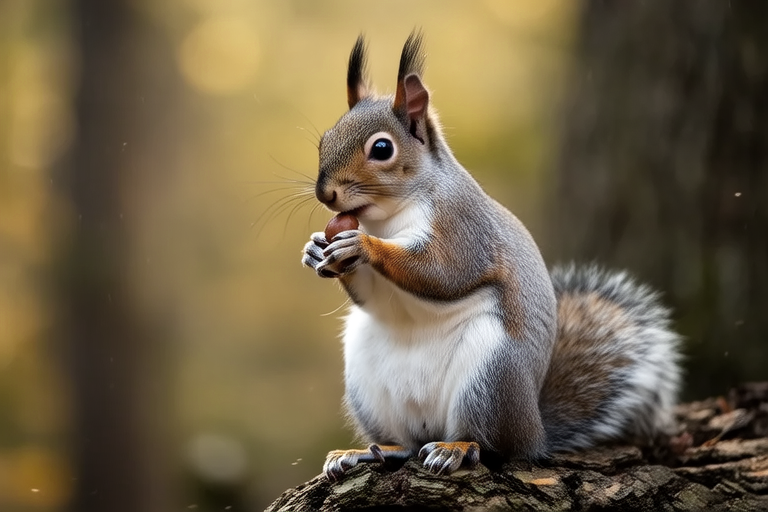
How Smart Are Squirrels? Uncovering Their Hidden Intelligence
Welcome to the fascinating world of squirrels! These small, bushy-tailed rodents are ubiquitous in many parts of the world, thriving in diverse ecosystems from bustling city parks to vast rural forests. Whether scampering up trees, darting across power lines, or digging in the ground, squirrels are a common sight that often goes unnoticed. But beneath their seemingly simple lives lies a surprising level of intelligence. Let’s delve into the remarkable cognitive abilities of these creatures and explore how they navigate their environments with cunning and precision.
The Prevalence of Squirrels in Ecosystems
Squirrels are found in nearly every corner of the globe, except for Antarctica, Australia, and certain islands. They play a crucial role in maintaining ecological balance, acting as seed dispersers and contributing to forest regeneration. In cities, squirrels are often seen as a charming addition to urban landscapes, providing entertainment for passersby. However, their presence is not merely aesthetic; they are also vital components of urban ecosystems, helping to control insect populations and enrich soil through their burrowing activities.
Physical Adaptations for Survival
To thrive in their environments, squirrels have developed an array of physical adaptations that enhance their chances of survival. One of the most notable features is their powerful hind legs, which allow them to leap impressive distances between branches and obstacles. Their sharp claws provide excellent grip when climbing trees, enabling them to navigate even the most challenging vertical surfaces with ease. Additionally, squirrels possess highly sensitive whiskers and keen eyesight, which help them detect potential threats and locate food sources with remarkable accuracy.
Cognitive Abilities: Problem-Solving Skills and Memory Capabilities
While squirrels may appear to be simple creatures, they possess impressive cognitive abilities that far exceed their size. One of the most striking aspects of their intelligence is their problem-solving prowess. When faced with obstacles, such as bird feeders designed to prevent access, squirrels often devise clever strategies to overcome them. Some have been observed using tools, like sticks or leaves, to reach food or bypass barriers. This ability to innovate demonstrates a high level of adaptability and creativity.
Another hallmark of squirrel intelligence is their exceptional memory, particularly when it comes to spatial awareness. Squirrels are renowned for their caching behavior, where they bury seeds and nuts for later consumption. To ensure they can retrieve these hidden treasures, squirrels rely on an impressive spatial memory. Research has shown that they can remember the precise location of thousands of caches, even months after initially storing them. This ability is crucial for their survival during lean times, as it allows them to access stored food when resources are scarce.
Behavioral Examples of Intelligence
The intelligence of squirrels is further demonstrated through their behavior in various situations. For instance, when faced with competition for food, squirrels have been known to engage in strategic behavior. They may pretend to cache food in one location while actually hiding it elsewhere, a tactic known as “deceptive caching.” This behavior helps protect their reserves from being stolen by other animals. Such actions showcase not only their problem-solving skills but also their understanding of social dynamics within their environment.
Navigating complex environments is another area where squirrels display remarkable intelligence. Their ability to move swiftly and efficiently through dense foliage, avoiding predators and finding safe routes, is a testament to their spatial awareness and agility. In urban settings, squirrels have adapted to human-made structures, learning to exploit new opportunities for shelter and sustenance. They can be seen scaling buildings, crossing roads, and even utilizing human-provided feeding stations with ease.
Comparison with Other Animals of Similar Size
When comparing the intelligence of squirrels to other animals of comparable size, it becomes evident that they stand out as particularly adept problem-solvers. While many small mammals exhibit basic survival instincts, squirrels demonstrate a higher degree of cognitive flexibility. For example, compared to mice, squirrels show greater proficiency in solving puzzles and navigating mazes. This difference can be attributed to their larger brain-to-body ratio, which provides more neural capacity for processing information and executing complex tasks.
Furthermore, squirrels’ ability to recall the locations of cached food sets them apart from many other small mammals. While some species may bury food temporarily, few exhibit the same level of long-term memory retention and retrieval as squirrels. This unique capability underscores their advanced cognitive functions and highlights the importance of memory in their survival strategies.
Ongoing Research and Future Studies
As scientists continue to study squirrel cognition, new insights are emerging that challenge previous assumptions about their mental capabilities. Researchers are employing innovative techniques, such as virtual reality simulations and brain imaging, to better understand how squirrels process information and make decisions. These studies aim to uncover the neural mechanisms underlying their problem-solving abilities and memory functions.
One exciting area of research focuses on the impact of environmental factors on squirrel intelligence. By examining how changes in habitat, climate, and human activity influence squirrel behavior, researchers hope to gain a deeper understanding of the adaptive nature of their cognitive processes. This knowledge could have broader implications for conservation efforts, as it may reveal ways to mitigate the effects of urbanization and climate change on wildlife.
In conclusion, squirrels are far more intelligent than they appear at first glance. Their problem-solving skills, memory capabilities, and ability to navigate complex environments demonstrate a level of cognitive sophistication that rivals many larger animals. As ongoing research continues to shed light on the intricacies of their minds, we are likely to discover even more about the hidden intelligence of these remarkable creatures. So next time you spot a squirrel scurrying by, take a moment to appreciate the incredible mind behind its seemingly simple actions.
