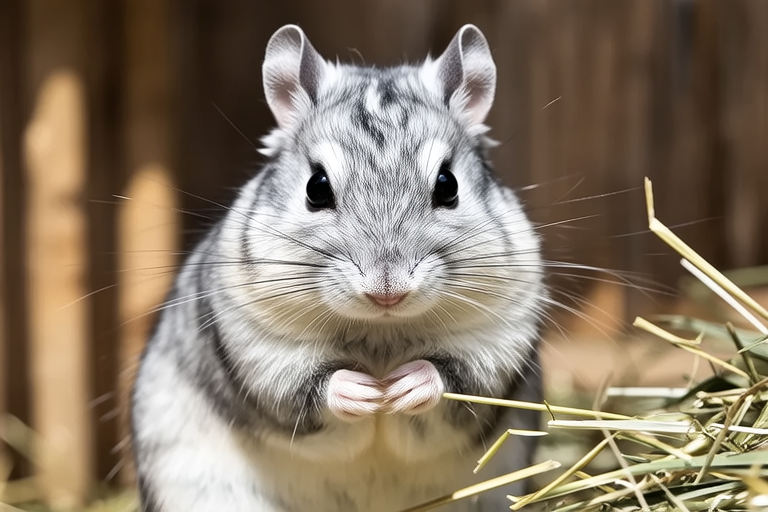
Top Myths About Chinchillas Debunked!
Chinchillas are fascinating creatures that have captured the hearts of many pet enthusiasts. However, there are several myths and misconceptions surrounding these small mammals. This article aims to shed light on some of the most common myths and provide accurate information based on scientific facts and expert opinions.
Myth 1: Chinchillas Only Eat Grass and Hay
One of the most pervasive myths about chinchillas is that they solely feed on grass and hay. While it’s true that chinchillas are herbivores and require a diet rich in fiber, their nutritional needs are more complex than this simple myth suggests.
Dr. Emily Thompson, a veterinarian specializing in exotic pets, explains, “Chinchillas need a balanced diet that includes high-quality timothy hay, pellets designed specifically for chinchillas, and a variety of fresh vegetables.” Timothy hay is crucial because it aids in digestion and keeps their teeth worn down, preventing dental issues. Pellets formulated for chinchillas contain essential nutrients like vitamins and minerals that are vital for their overall health.
Real-world example: A chinchilla named Charlie was brought to Dr. Thompson with digestive problems. Upon examination, it was discovered that Charlie had been fed an unbalanced diet consisting mostly of grass. Once his diet was adjusted to include appropriate hay, pellets, and vegetables, Charlie’s health improved significantly.
Myth 2: Chinchillas Don’t Need Dust Baths
Another widespread misconception is that chinchillas don’t require dust baths. In reality, dust bathing is a fundamental part of a chinchilla’s natural grooming behavior and hygiene.
Dr. Thompson further elaborates, “Dust baths help remove excess oils from their fur and prevent skin conditions. It’s important to provide a shallow container filled with chinchilla-specific dust at least three times a week for about 15 minutes each time.” Overbathing can strip the fur of its natural oils, leading to dryness and potential skin irritations.
Real-world example: At the local pet store, a customer was advised against providing dust baths for her chinchilla, Daisy. As a result, Daisy developed flaky skin and became less active. After incorporating regular dust baths into Daisy’s routine, her coat became healthier, and she regained her playful demeanor.
Myth 3: Chinchillas Can Be Kept in Small Cages
The idea that chinchillas can thrive in small cages is another common myth. Chinchillas are highly active and require ample space to exercise and explore.
According to Dr. Thompson, “Chinchillas need a cage that allows them to jump and move freely. The cage should be at least 4 square feet per chinchilla, with multiple levels and ramps for climbing. Additionally, the cage should be equipped with toys and tunnels to stimulate mental and physical activity.”
Real-world example: In a suburban home, a family adopted two chinchillas, Boris and Natasha, and placed them in a standard-sized cage. Boris and Natasha became lethargic and exhibited signs of stress. After moving them to a larger cage with additional enrichment items, their energy levels increased, and they were observed playing and exploring more frequently.
Myth 4: Chinchillas Are Low-Maintenance Pets
Contrary to popular belief, chinchillas require careful attention and maintenance. Their unique care requirements make them unsuitable for novice pet owners or those who cannot commit to consistent care.
Dr. Thompson advises, “Chinchillas need a stable environment with controlled temperature and humidity levels. They are sensitive to heat and should never be exposed to temperatures above 80°F (27°C). Regular health checks, proper diet, and social interaction are also crucial for their well-being.”
Real-world example: A young couple adopted a chinchilla, Spike, without fully understanding his care needs. Spike was left alone for long periods, and the temperature in their apartment often exceeded 80°F. Spike became ill and lost weight. With professional guidance, the couple learned about Spike’s specific needs and implemented necessary changes, leading to Spike’s recovery.
Myth 5: Chinchillas Are Noisy Pets
Some people believe that chinchillas are noisy pets, but this is not entirely accurate. While chinchillas do vocalize, their sounds are generally soft and not disruptive.
Dr. Thompson clarifies, “Chinchillas communicate through various sounds, including chirps, squeaks, and purrs. These vocalizations are usually associated with interactions between chinchillas or when they are startled. Providing a calm and secure environment can reduce excessive noise.”
Real-world example: In a quiet neighborhood, a family adopted a chinchilla, Luna. Initially concerned about noise, they found that Luna’s vocalizations were minimal and easily managed by ensuring her comfort and safety.
Myth 6: Chinchillas Are Suitable for Children
There’s a misconception that chinchillas are ideal pets for children due to their small size and seemingly gentle nature. However, chinchillas are delicate animals that require careful handling.
Dr. Thompson warns, “Children should always be supervised when interacting with chinchillas. The animals are fragile and can be injured by rough handling. It’s best for adults to handle chinchillas and teach children how to interact gently and respectfully.”
Real-world example: A family with young children adopted a chinchilla, Whiskers. Without proper supervision, one child accidentally dropped Whiskers, causing injury. The family learned the importance of adult supervision and gentle handling to ensure Whiskers’ safety.
Conclusion
Chinchillas are enchanting pets with specific care requirements that are often misunderstood. By debunking these myths and providing accurate information, we hope to promote responsible ownership and ensure that chinchillas receive the care they deserve. Remember, chinchillas are not just any pet; they are unique creatures that demand respect, attention, and love. With the right knowledge and commitment, owning a chinchilla can be a rewarding and delightful experience.
