Top 10 Fascinating Facts About Clownfish That Will Blow Your Mind
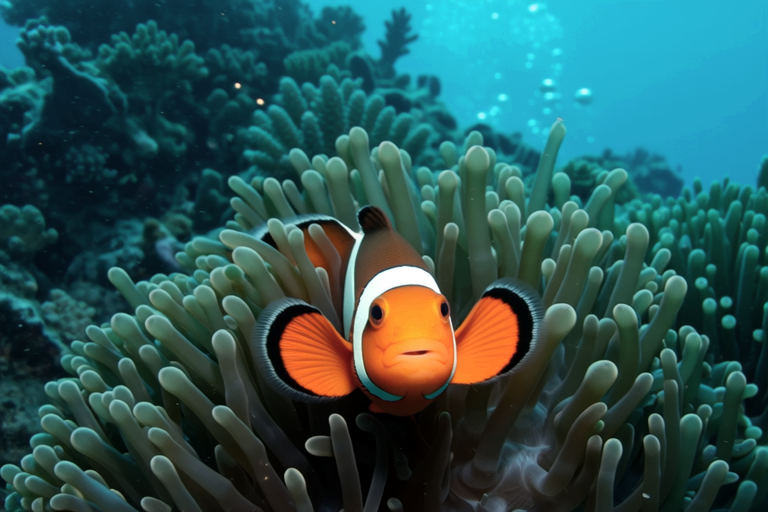
Clownfish, those vibrant orange and white striped fish often seen swimming around sea anemones, have captured the hearts of aquarium enthusiasts and marine biologists alike. These small yet fascinating creatures have more secrets to their survival than meets the eye. Dive into the ocean with us as we uncover ten mind-blowing facts about these delightful fish.
1. Symbiotic Relationships with Sea Anemones: A Dance of Mutualism
One of the most iconic relationships in the marine world is that between clownfish and sea anemones. This partnership, known as mutualism, benefits both parties. The clownfish, with its thick mucus coating, is immune to the anemone’s stinging cells, allowing it to live among the tentacles for protection from predators. In return, the clownfish brings food to the anemone by driving away intruders and attracting prey. This dance of dependency is a testament to nature’s intricate balance.
2. Evolutionary Adaptations for Survival: The Mucus Secret
How does the clownfish survive in the presence of the anemone’s potent stingers? The answer lies in its evolutionary adaptation – a special mucus layer that coats its body. This mucus contains sugars that neutralize the toxins in the anemone’s nematocysts (stinging cells). Scientists believe this adaptation evolved over millions of years, making the clownfish one of the few animals that can live within the deadly embrace of the anemone.
3. Habitat Specifics: Thriving in Warm Tropical Waters
Clownfish are native to the tropical waters of the Indo-Pacific region, including the Great Barrier Reef, the Red Sea, and the Maldives. They prefer coral reefs where sea anemones thrive, providing them with both shelter and food. The warm, shallow waters of these regions offer ideal conditions for the clownfish to flourish, with temperatures ranging from 72 to 82 degrees Fahrenheit (22 to 28 degrees Celsius).
4. Dietary Habits: Omnivorous Wonders
Contrary to popular belief, clownfish are not picky eaters. They are omnivores, feeding on a variety of foods such as algae, zooplankton, and small invertebrates. Their diet is diverse, ensuring they get all the necessary nutrients to maintain their health and energy levels. Recent studies have shown that clownfish in captivity tend to eat more algae, while those in the wild consume a higher proportion of zooplankton.
5. Reproduction Methods: The Matriarchal Harem
Clownfish exhibit a unique reproductive strategy. They form monogamous pairs, but only the largest female and male in the group reproduce. The rest of the group consists of non-breeding males and juveniles. When the dominant female dies, the largest male undergoes a remarkable transformation. Within a few days, he changes sex and becomes the new breeding female, ensuring the continuation of the species.
6. Conservation Status: Facing Challenges in the Wild
Despite their popularity, clownfish face several threats in the wild. Overfishing, habitat destruction, and climate change pose significant risks to their populations. Coral reefs, which are essential for their survival, are declining due to rising sea temperatures and ocean acidification. Conservation efforts are crucial to protect these beautiful creatures and their habitats. Marine protected areas and sustainable fishing practices can help ensure the survival of clownfish for future generations.
7. Recent Discoveries: The Impact of Climate Change
Recent studies have revealed the impact of climate change on clownfish populations. Increased carbon dioxide levels in the ocean lead to more acidic waters, affecting the development of clownfish larvae. Scientists have found that larvae raised in high CO2 environments struggle to find their way back to sea anemones, reducing their chances of survival. This discovery highlights the urgent need for action to combat climate change and protect marine ecosystems.
8. Unique Traits: Colorful Variations
While the iconic orange and white stripes of the clownfish are well-known, there are actually several color variations. Some species have black stripes instead of white, and others may have different patterns altogether. These variations are due to genetic differences and environmental factors. Each species of clownfish has its own distinct appearance, adding to their charm and allure.
9. Behavior Patterns: Social Structure and Communication
Clownfish are highly social creatures, living in groups of up to six individuals. They communicate through a series of chirps, pops, and clicks, which can be heard above water. These sounds serve various purposes, from establishing territory to attracting mates. Their behavior is fascinating to observe, as they display a complex social structure within their groups.
10. Evolutionary Success: A Long History
Clownfish have been around for millions of years, evolving alongside sea anemones and coral reefs. Fossil records show that their ancestors lived during the Cretaceous period, when dinosaurs roamed the Earth. Their ability to adapt to changing environments has contributed to their evolutionary success, making them one of the most resilient species in the ocean.
In conclusion, clownfish are much more than just colorful companions to sea anemones. They are fascinating creatures with unique traits, behaviors, and evolutionary adaptations that make them stand out in the marine world. By learning more about these amazing fish, we can better appreciate the delicate balance of our oceans and work towards protecting them for future generations.
