The Hidden World of Heterometrus spinifer: Exploring Its Habitat and Behavior
Deep within the lush, dense forests of Southeast Asia, there exists a creature that has captivated the attention of biologists and nature enthusiasts alike. Known as Heterometrus spinifer, this scorpion species is a marvel of evolutionary adaptation, showcasing unique physical traits and intriguing behaviors. This article delves into the world of Heterometrus spinifer, exploring its habitat, behavior, and the challenges it faces in the modern world.
Introduction to Heterometrus spinifer
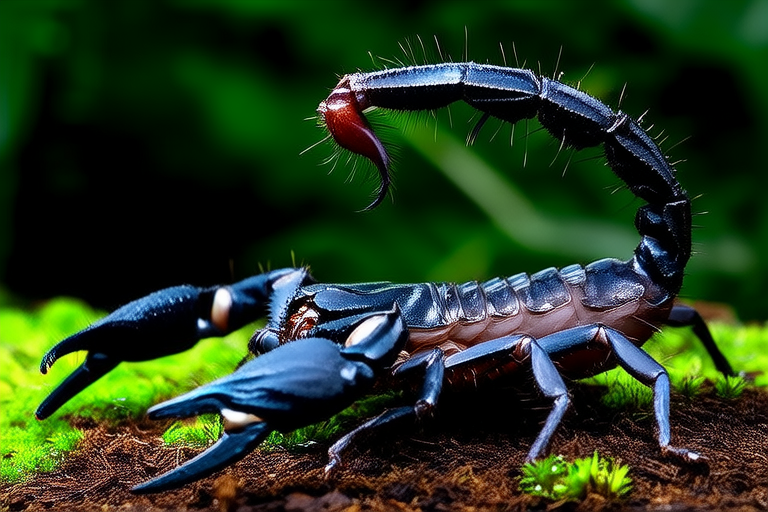
The Heterometrus spinifer belongs to the family Scorpionidae and is characterized by its robust body structure and formidable pincers. It can grow up to 15 centimeters in length, making it one of the largest scorpions in its region. The most striking feature of this species is its spiny exoskeleton, which provides both protection and a unique appearance. The spines on its tail and legs are particularly prominent, serving as effective deterrents against predators and rivals.
The coloration of Heterometrus spinifer ranges from dark brown to black, with some individuals displaying a lighter underbelly. These colors serve as excellent camouflage in their natural habitat, helping them blend seamlessly with the environment. Additionally, their large, compound eyes provide excellent night vision, allowing them to navigate through the dense foliage and locate prey efficiently.
Natural Habitat and Geographical Distribution
Heterometrus spinifer thrives in humid, tropical environments, where they find ample cover and prey. They are primarily found in the dense rainforests of Thailand, Malaysia, and Indonesia, where the climate remains consistently warm and moist throughout the year. The species prefers habitats rich in vegetation, such as bamboo thickets, rocky outcrops, and riverbanks, providing shelter and suitable conditions for their nocturnal lifestyle.
The geographical distribution of Heterometrus spinifer extends across several countries in Southeast Asia, but their population density varies significantly. In regions where human activity is minimal, such as protected national parks and remote forest areas, their numbers remain stable. However, deforestation and urbanization have led to a decline in their population in certain parts of their range.
Behavioral Traits
Like many scorpions, Heterometrus spinifer is a nocturnal predator, emerging at dusk to hunt for food. Their diet primarily consists of insects, spiders, and other small invertebrates. The scorpions employ a combination of stealth and speed when hunting. They patiently wait for prey to come within reach, using their keen sense of touch and vibration detection to locate potential victims. Once a target is identified, they strike swiftly, using their powerful pincers to subdue the prey before injecting venom through their stinger.
Interestingly, Heterometrus spinifer also displays social behavior, which is relatively uncommon among scorpion species. They are known to form small groups, especially during the mating season. These aggregations offer protection against larger predators and increase the chances of successful reproduction. Males engage in elaborate courtship rituals, involving intricate dances and tactile communication, to attract females.
Defensive mechanisms are crucial for the survival of Heterometrus spinifer. When threatened, they adopt a characteristic posture, raising their tail over their back and pointing the stinger toward the perceived danger. This stance serves as a visual deterrent, often deterring predators without the need for actual venom injection. Additionally, their spiny exoskeleton provides an additional layer of protection, making it difficult for predators to grasp or harm them.
Recent Studies and Findings
In recent years, scientists have conducted extensive research on Heterometrus spinifer to better understand its biology and ecology. One significant finding involves the composition of their venom, which has been shown to contain a complex mix of neurotoxins and enzymes. These compounds have garnered interest from medical researchers, who are investigating potential applications in pain management and neurology. Understanding the specific components of the venom could lead to the development of new treatments for various neurological disorders.
Another area of focus has been the impact of environmental changes on Heterometrus spinifer. Researchers have observed that while the species can adapt to some extent, rapid deforestation and habitat fragmentation pose significant threats. These changes disrupt the delicate balance of their ecosystem, reducing available prey and increasing competition for resources. Conservation efforts are now focused on preserving critical habitats and promoting sustainable land use practices.
The Importance of Conservation
The survival of Heterometrus spinifer and its habitat is crucial for maintaining the ecological balance of Southeast Asian ecosystems. As keystone species, scorpions play a vital role in controlling insect populations and contributing to nutrient cycling. Their presence also serves as an indicator of overall environmental health, highlighting the need for conservation initiatives.
Human activities, particularly deforestation and urbanization, continue to pose significant challenges to the survival of Heterometrus spinifer. The conversion of natural habitats into agricultural lands and urban areas reduces available space for these scorpions and disrupts their food chains. Additionally, the use of pesticides in agriculture can have detrimental effects on both the scorpions and their prey, further exacerbating the problem.
Conservationists emphasize the importance of protecting and restoring critical habitats, as well as implementing policies that promote sustainable land use. Public awareness campaigns are also essential in educating communities about the value of biodiversity and the need for responsible resource management. By working together, we can ensure the continued existence of Heterometrus spinifer and preserve the rich tapestry of life in Southeast Asian forests.
Conclusion
The world of Heterometrus spinifer is a fascinating realm filled with unique adaptations and behaviors. From their distinctive physical features to their intricate hunting and social interactions, these scorpions offer a window into the complexity of life in tropical forests. While ongoing research continues to uncover new insights, it is imperative that we act now to protect their habitats and ensure their survival for future generations.
By understanding and appreciating the hidden world of Heterometrus spinifer, we can foster a greater sense of responsibility towards our planet’s biodiversity. Let us strive to conserve these remarkable creatures and the ecosystems they inhabit, ensuring that their legacy endures for centuries to come.
