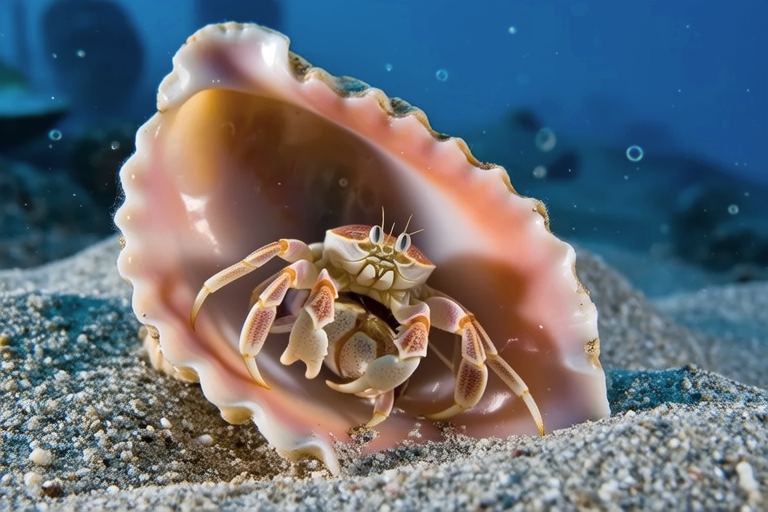
The Surprising Symbiosis Between Pea Crabs and Their Hosts
Symbiosis, the close and often long-term interaction between two different biological species, plays a crucial role in marine ecosystems. This relationship can be mutually beneficial (mutualism), where both species benefit; parasitic, where one species benefits at the expense of the other; or commensal, where one species benefits while the other is neither helped nor harmed. In marine environments, symbiosis is particularly significant as it contributes to the stability and complexity of these ecosystems. From coral reefs to deep-sea vents, symbiotic relationships help maintain biodiversity and provide essential services such as nutrient cycling and habitat creation.
Understanding the Unique Relationship Between Pea Crabs and Their Hosts
Pea crabs, members of the family Pinnotheridae, are tiny crustaceans known for their remarkable symbiotic relationships with various marine organisms. These crabs are named after their size, which is typically no more than a few centimeters in length. Their hosts include bivalves, sea cucumbers, echinoderms, and even some sponges. The relationship between pea crabs and their hosts is a classic example of mutualism, where both parties benefit from the association.
For pea crabs, the primary advantage of this symbiosis is protection from predators. Living inside the protective shells of their hosts provides them with a safe haven, reducing their risk of being preyed upon by larger marine creatures. Additionally, pea crabs gain access to a constant food supply, as they feed on the nutrients filtered by their hosts or consume the host’s reproductive organs. In return, pea crabs offer some form of assistance to their hosts. They may help in cleaning the host’s tissues, preventing infections, or even enhancing the host’s reproductive success by protecting its eggs.
Specific Examples of Host Species Commonly Associated with Pea Crabs
One of the most well-known associations is between pea crabs and oysters. Inside the oyster’s shell, the pea crab finds shelter and a reliable food source. Another common host is the sea cucumber. Pea crabs residing within sea cucumbers can benefit from the constant flow of water and nutrients through the host’s body, ensuring a steady supply of food. Furthermore, they can also assist the sea cucumber in cleaning itself by consuming debris and parasites.
Echinoderms, such as starfish and sea urchins, also serve as hosts for pea crabs. In these cases, the crabs benefit from the mobility provided by the host, allowing them to explore a wider area in search of food. Interestingly, some species of sponges have been found to house pea crabs as well. These sponges provide a stable environment rich in nutrients, while the crabs may aid in maintaining the sponge’s health by removing harmful substances.
Scientific Research and Studies Contributing to Understanding This Symbiosis
Several scientific studies have shed light on the intricacies of the symbiotic relationship between pea crabs and their hosts. Researchers have observed that the presence of pea crabs can significantly influence the behavior and physiology of their hosts. For instance, studies have shown that oysters with pea crabs exhibit increased growth rates compared to those without. This suggests that the crabs may play a role in enhancing the host’s overall health.
Moreover, genetic analyses have revealed that some pea crab species have evolved alongside their hosts, developing specialized adaptations to thrive within their particular host species. This co-evolutionary process highlights the importance of symbiosis in shaping the diversity of marine life. Scientists continue to investigate the mechanisms behind this mutualistic relationship, aiming to understand how pea crabs and their hosts communicate and coordinate their activities.
The Implications of This Symbiotic Relationship on Marine Biodiversity and Conservation Efforts
The symbiotic relationship between pea crabs and their hosts has profound implications for marine biodiversity and conservation efforts. By promoting the health and survival of both partners, these interactions contribute to the overall stability of marine ecosystems. However, threats such as pollution, overfishing, and climate change pose significant risks to these delicate relationships.
Conservation strategies must take into account the interconnectedness of species within marine environments. Protecting one species can indirectly benefit others, including those involved in symbiotic relationships. Therefore, it is crucial to adopt a holistic approach to marine conservation, considering the broader ecosystem rather than focusing solely on individual species.
In conclusion, the surprising symbiosis between pea crabs and their hosts exemplifies the intricate web of relationships that characterize marine ecosystems. This mutualistic partnership not only highlights the adaptability and resilience of marine life but also underscores the importance of preserving these delicate balances for the future health of our oceans.
