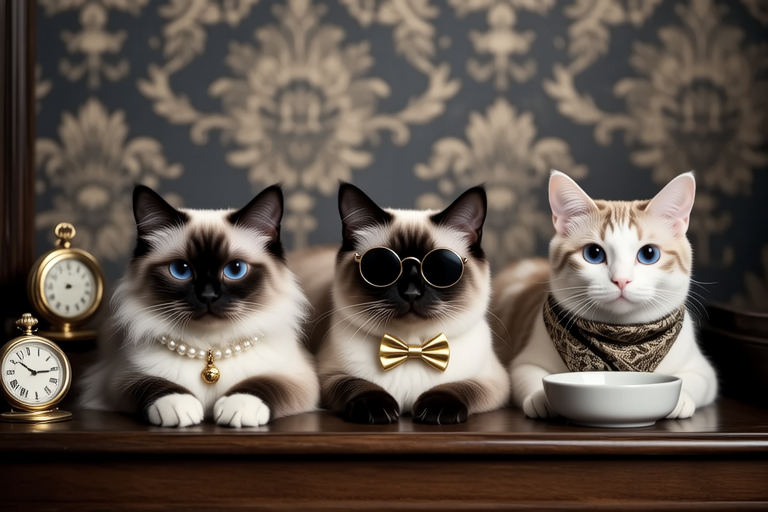
The Historical Journey of Siamese Cats
The Siamese cat, with its striking blue almond-shaped eyes, sleek body, and distinct color points, has captivated humans for centuries. Originating from ancient Thailand, these elegant felines have transitioned from sacred temple cats to cherished companions in Western societies. This article explores the historical journey of Siamese cats, focusing on key periods and events that have shaped their popularity, breeding standards, and cultural significance.
Origins in Ancient Thailand
Siamese cats trace their roots back to the Ayutthaya Kingdom in Thailand, formerly known as Siam. These cats were highly revered and played significant roles in the religious and social fabric of Thai society. According to legend, Siamese cats were considered sacred and were often kept in temples, where they were believed to protect the premises from evil spirits. The cats’ intelligence and agility made them ideal guardians, and their close association with temples elevated their status among the populace.
In ancient times, Siamese cats were also companions to the royal family. They were said to be gifted to visiting dignitaries as symbols of friendship and goodwill. The royal connection endowed these cats with a regal air, and they became synonymous with luxury and refinement.
Introduction to Western Societies
The first recorded appearance of Siamese cats in the West occurred in the mid-19th century when a pair was presented as a gift to the British Consul General in Bangkok, Edward Blencowe Gould. The cats, named Pho and Mia, were sent to his sister, Lady Dorothy Sewell, who lived in England. Their arrival caused a sensation due to their unusual appearance and behavior. Siamese cats were unlike any other breed then known in Europe, and their exotic appeal quickly captured the attention of cat fanciers.
Their introduction to the United States came slightly later, around the late 1870s, when they were exhibited at the Philadelphia Centennial Exhibition. By the early 20th century, Siamese cats had established a strong presence in both American and British cat shows. Their increasing visibility led to the formation of breed clubs and the development of standardized breeding practices.
Shaping Popularity and Breeding Standards
The early 20th century marked a period of significant growth for the Siamese breed. In 1906, the Siamese Cat Club was founded in Britain, and in 1909, the breed was officially recognized by the Cat Fanciers’ Association (CFA) in the United States. These organizations played crucial roles in establishing and refining the breed’s physical traits and temperament.
The traditional Siamese cat, characterized by a stocky build, a round head, and vivid blue eyes, began to evolve during this period. Breeders focused on enhancing the cat’s elegance and grace, leading to the development of the modern Siamese with its slender physique and wedge-shaped head. This transformation was driven by the desire to create a more visually appealing and distinctive breed.
The introduction of new color points further diversified the breed. Initially, only seal point Siamese were recognized, but over time, chocolate, blue, and lilac points were accepted, expanding the range of colors available within the breed.
Cultural Significance and Roles
Throughout history, Siamese cats have held various roles, reflecting the changing attitudes towards them. From their origins as temple guardians and royal companions, they evolved into beloved pets and show animals. Their transition from sacred to secular reflects broader societal shifts, including increased urbanization and the rise of pet ownership.
In literature and popular culture, Siamese cats have been portrayed as intelligent, mischievous, and occasionally mystical. Their distinctive appearance and behavior have made them memorable characters in books, films, and television shows. For instance, Siamese cats featured prominently in T.S. Eliot’s Old Possum’s Book of Practical Cats, inspiring the Broadway musical Cats.
Their role as show animals has also contributed to their cultural significance. Siamese cats have won numerous championships at cat shows worldwide, cementing their reputation as one of the most beautiful and elegant breeds. Their success in the show ring has helped to maintain interest in the breed and encouraged continued breeding efforts.
Physical Traits and Temperament
Siamese cats are known for their striking appearance, which includes a pale coat with darker extremities, large ears, and expressive blue eyes. These physical traits are the result of a genetic mutation that causes restricted pigment distribution, leading to the characteristic color points on the face, paws, tail, and ears. The contrast between the light body and dark points is what makes Siamese cats so visually captivating.
Besides their physical beauty, Siamese cats are renowned for their intelligence, curiosity, and sociability. They are known to be vocal and communicative, often engaging in conversations with their owners through a variety of meows and chirps. This trait has earned them the nickname “the chatterboxes” of the cat world. Their high level of interaction makes them excellent companions for people seeking an active and engaging pet.
Notable Figures and Historical Contexts
Several notable figures have played pivotal roles in the evolution of the Siamese cat. Edward Blencowe Gould’s gift of Pho and Mia to his sister in 1884 marked the beginning of the breed’s Western journey. Their arrival in Britain sparked immediate interest and set the stage for the breed’s future popularity.
In the United States, the Siamese Cat Club was instrumental in promoting the breed and establishing breeding standards. The club’s efforts helped to ensure the preservation and improvement of the breed’s qualities, contributing to its enduring popularity.
Historical events such as world wars and economic depressions have also impacted the breed. During these challenging times, the demand for pets declined, but Siamese cats managed to maintain their popularity due to their adaptability and appeal. Their ability to thrive in diverse environments and their enduring charm have ensured their place in the hearts of cat lovers.
Current Status in Modern Pet Culture
In modern pet culture, Siamese cats continue to be highly sought after. Their popularity can be attributed to their unique appearance, friendly nature, and adaptability. Many people choose Siamese cats as companions because of their affectionate and interactive personalities.
The specialized grooming environment of purrsalons has also contributed to the breed’s popularity. These establishments offer professional grooming services tailored to the specific needs of cats, ensuring they remain clean, healthy, and comfortable. The emphasis on grooming underscores the importance of maintaining the breed’s distinctive appearance and overall well-being.
Moreover, the increasing availability of information about cat breeds and the rise of social media have made it easier for potential owners to learn about and connect with Siamese cats. Online communities and forums provide platforms for enthusiasts to share experiences, advice, and resources, fostering a supportive network for Siamese cat lovers.
Conclusion
The Siamese cat’s journey from sacred temple guardian to beloved pet and show animal is a testament to its enduring appeal. From their royal origins in ancient Thailand to their adaptation in Western societies, Siamese cats have captivated humans with their beauty, intelligence, and charm. Key periods and events, along with the efforts of notable figures, have shaped their popularity, breeding standards, and cultural significance. Today, Siamese cats remain a favorite among cat enthusiasts, celebrated for their unique characteristics and enduring popularity.
