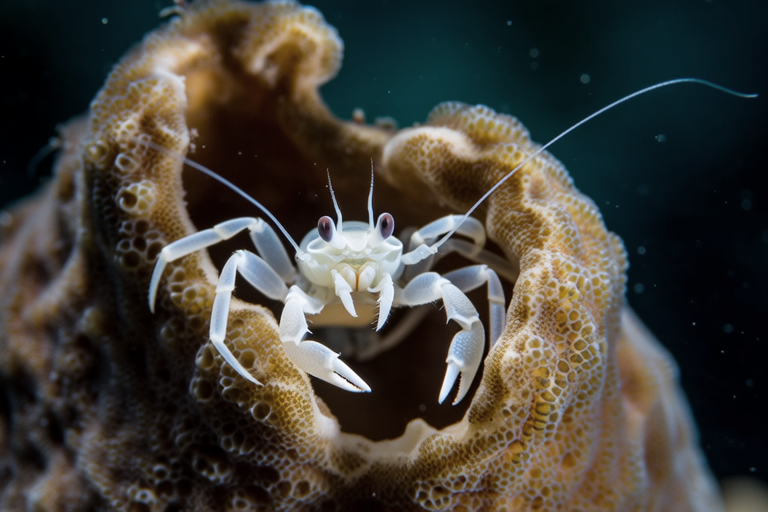
The Cozy Relationship Between Sea Sponges and Pea Crabs
In the vast and mysterious world of marine life, there exists a fascinating relationship between sea sponges and pea crabs. This mutualistic bond is one of nature’s most remarkable examples of symbiosis, where both organisms benefit from each other’s presence. The pea crab, a tiny crustacean, finds refuge and food within the porous bodies of sea sponges, while the sponge gains protection from predators through the presence of its crab guest.
Understanding Symbiosis: A Mutualistic Bond
Symbiosis refers to a close and long-term biological interaction between two different species. In the case of sea sponges and pea crabs, their relationship falls under the category of mutualism, where both species derive benefits from the association. This relationship is not just beneficial but essential for the survival of both parties.
The Pea Crab’s Home Sweet Home
Pea crabs are small, soft-bodied crabs that have adapted perfectly to living inside sea sponges. Their flattened bodies and lack of heavy armor make it easier for them to maneuver through the sponge’s intricate network of canals and chambers. These crabs are often found in pairs, and they spend their entire lives within the same sponge, moving from one generation to the next as the sponge grows and changes.
How the Relationship Benefits Both Species
The benefits of this mutualistic relationship are numerous and significant for both the sea sponge and the pea crab. For the pea crab, the sponge provides shelter from predators and a steady supply of food. The sponge’s canals and chambers offer a safe haven, protecting the crabs from larger marine animals that might otherwise prey on them. Additionally, the sponge’s filtration system brings in a constant stream of plankton and organic matter, which the pea crabs consume.
For the sea sponge, the presence of pea crabs serves as a form of defense against potential predators. Many fish and other marine creatures find the taste of sponges unappealing due to the toxins they produce. However, some species still pose a threat. The pea crabs, being mobile and potentially aggressive, can deter these predators by biting or releasing chemical deterrents. This reduces the likelihood of the sponge being damaged or consumed.
Adaptations of Pea Crabs for Living Within Sponges
The pea crabs have evolved several unique adaptations to thrive in their sponge homes. Their flattened bodies allow them to fit snugly into the sponge’s narrow passages, while their soft exoskeletons enable them to avoid getting stuck. Additionally, pea crabs have developed a tolerance for the toxins produced by the sponge, which would be harmful to many other organisms. They also possess specialized appendages that help them filter out food particles from the water flowing through the sponge.
Threats to the Relationship
Despite the mutual benefits, the relationship between sea sponges and pea crabs faces several threats. Environmental factors such as pollution, climate change, and habitat destruction can harm both species. Pollution, particularly from oil spills and plastic waste, can damage the delicate structure of the sponge, making it less habitable for the pea crabs. Climate change can alter ocean temperatures and acidity levels, affecting the growth and health of both the sponge and the crab.
Overfishing is another significant threat. While the pea crabs themselves are not typically targeted by fishermen, the removal of larger predatory fish can disrupt the balance of the ecosystem. With fewer predators around, populations of smaller fish that feed on sponges may increase, leading to overgrazing and reduced sponge populations. This, in turn, can negatively impact the pea crab population.
The Ecological Significance of Their Interaction
The relationship between sea sponges and pea crabs plays a crucial role in maintaining the health and biodiversity of marine ecosystems. Sponges are important components of coral reefs and other marine habitats, providing structural complexity and serving as nurseries for various species of fish and invertebrates. By protecting the sponges from predation, pea crabs indirectly support the broader marine community.
Moreover, the filtering activity of sponges contributes to water quality by removing suspended particles and nutrients from the surrounding environment. This process helps maintain a healthy balance of nutrients in the water, benefiting not only the sponge-pea crab relationship but also other organisms that rely on clean water for survival.
In conclusion, the cozy relationship between sea sponges and pea crabs exemplifies the intricate web of life in our oceans. This mutualistic bond highlights the importance of preserving marine ecosystems and the diverse array of species that inhabit them. By understanding and protecting these relationships, we can work towards ensuring the health and sustainability of our oceans for future generations.
